
Educational Equity in the Age of AI
How Access to Artificial Intelligence Affects Educational Opportunities Across Different Racial and Socioeconomic Groups
Abstract
Educational equity remains a significant challenge in the United States, as students from different racial and socioeconomic backgrounds often have unequal access to resources that support academic success. The rapid growth of modern educational technologies, particularly artificial intelligence (AI), has created new learning opportunities. Platforms such as DreamBox and Kidaptive use AI to personalize student learning content to address their specific strengths and weaknesses. Beyond the classroom, AI-driven tutoring systems such as Carnegie Learning’s MATHia and Khanmigo offer on-demand feedback comparable to a human tutor. As it stands, these innovations have the potential to widen or bridge existing achievement gaps depending on their distribution. This project will examine how access to and education about artificial intelligence platforms contribute to differences in educational opportunities and academic outcomes across racial and socioeconomic groups. Specifically, the study will investigate whether students with greater access to AI and higher AI literacy report higher levels of academic achievement, confidence, and participation in advanced coursework than students with more limited access and understanding of AI. To address this question, we will conduct a literature review examining differences in access to artificial intelligence and AI literacy among U.S. secondary students, with particular attention to socioeconomic and racial disparities. We will also review publicly available AI policies and guidance from approximately 6-9 U.S. public school districts representing different geographic and socioeconomic communities. Using findings from our literature review, we will examine how these schools address several areas related to AI equity, including access to AI tools and technology, AI literacy, student guidance, teacher preparation, responsible use, bias, privacy, and support for students with different levels of technology access. Rather than ranking individual school districts, we will use the policy review to identify recurring approaches, examples, and potential gaps. We will compare these findings with existing research to develop a set of practical, research-based recommendations for more equitable AI use in schools. The research and policy analysis will serve as the evidence base for our advocacy project.
Meet the Team
-

Amanda Kahn
Amanda Kahn (she/her) is a sophomore at Byram Hills High School in Armonk, New York, with a strong interest in the intersection of education, technology, and social impact. Her work focuses on educational equity and digital equity, particularly how emerging technologies like artificial intelligence influence learning, critical thinking, and access to opportunity. Through her school’s science research program, she is studying the effects of AI on cognitive engagement. Amanda is the founder of the Brain Balance Initiative and leads a student club, AI Roundtable, that promotes the responsible and effective use of AI as a tool for learning. Outside of school, she plays on the Byram Hills Tennis Team and writes for the Oracle newspaper. She is actively involved in community service, tutoring reading to students in underserved communities through the Reading Buddies program at the Family Service Society of Yonkers and volunteering with The STEM Alliance, where she helps expand access to technology and early STEM education for younger students. Through her advocacy and service, Amanda is committed to helping ensure that all students have the skills and resources needed to learn, think critically, and succeed.
-
Jana Pierrette
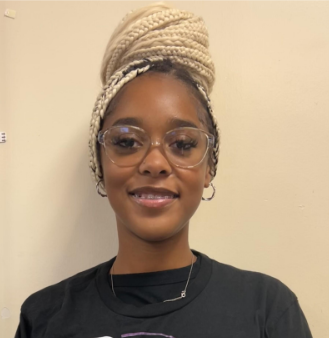
Jana “JP” Pierrette (she/her) is a junior at Chapel Hill High School in Douglasville, GA, known for her school spirit and campus involvement. She serves as President of DECA and as Secretary for Key Club and the Student Government Association, where she helps coordinate events and support communication. Known for her optimism and dedication, Jana actively fosters engagement across multiple organizations. She is especially passionate about community service and has a strong interest in understanding the effects of poverty on adolescents and teenagers. Reflecting this commitment, she founded “Dress to Impress,” a project at her school that provides business formal and business casual attire to students in need. Through her involvement in the Delta G.E.M.S. program, she participates in workshops and outreach activities focused on leadership and personal growth. In addition, Jana is a dedicated member of her school’s marching band, where she performs as a 1st chair clarinetist and mellophone player.
-

Troy Stevenson-House
Troy Stevenson-House (he/him) is a rising Junior at Columbia High School in Maplewood, NJ, committed to social and environmental justice. As President of the Students for Social Justice Club and a New Voters 250 Fellow, Troy organized voter registration drives and visited local middle schools to conduct interactive media literacy workshops focused on ideological echo chambers on social media. Troy is a math tutor under the Achieve Foundation and mentors students in geometry. He is an NAACP ACT-SO competitor and will attend the National ACT-SO competition this summer, competing in the poetry, health, and medicine categories, with a focus on food deserts and nutritional inequality. This fall, Troy will be a writer and teen staff member for Sex Etc., a student-led sex education magazine affiliated with Rutgers Univ., where he’ll publish pieces addressing the underrepresentation of queer youth in sex ed courses. Troy's advocacy spans racial equity and LGBTQ+ inclusion, united by a dedication to dismantling systemic barriers that alienate and suppress student achievement.