The Sound of Advocacy: Music, Neuroscience, and Youth Leadership
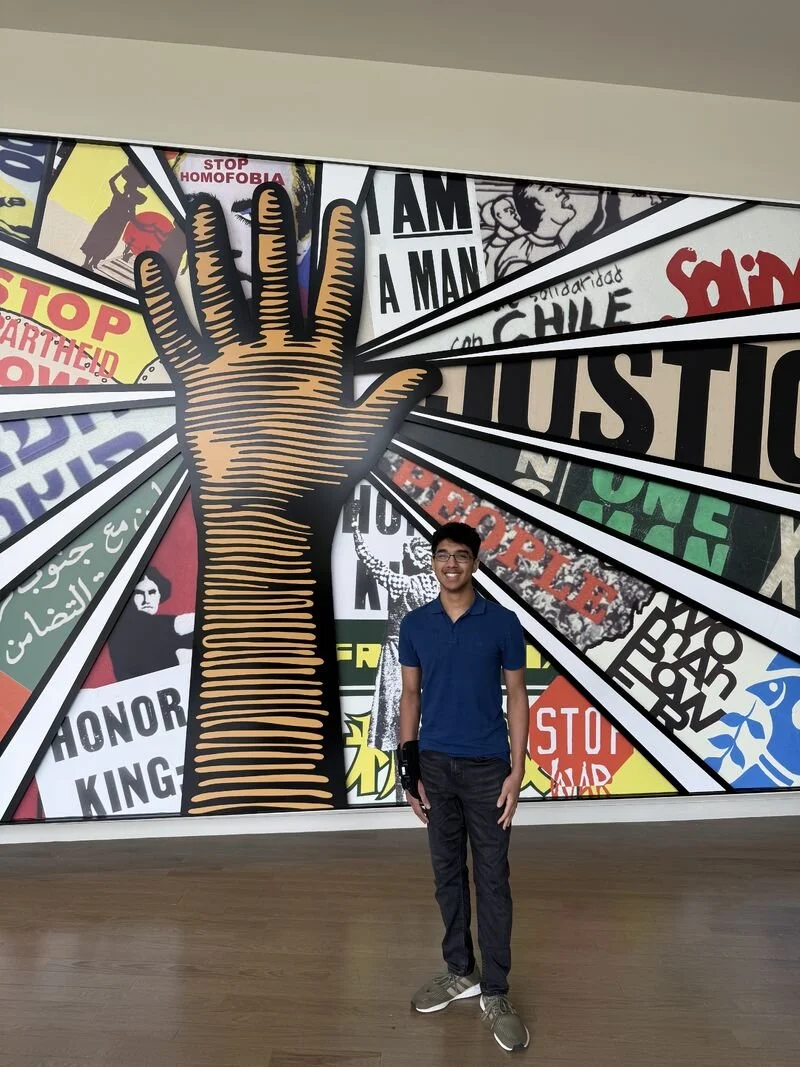
As a 2026 National Youth Advocacy Corps Fellow at the Rustin Institute, I had the opportunity to participate in “Arts, Health & Human Rights” at the National Center for Civil and Human Rights, an intergenerational dialogue exploring how creativity and cultural expression can advance wellbeing, strengthen communities, and confront inequities. The event brought together researchers, clinicians, artists, policymakers, and youth advocates to examine how art, storytelling, music, and advocacy can help build healthier and more just futures across generations and across borders. During the fireside chat, I shared my perspective on the intersection of music, neuroscience, and advocacy, particularly how the arts can support brain health, cognitive resilience, and community wellbeing. The following reflection explores how that conversation, and the historical legacy of the space itself, reshaped the way I think about advocacy, access, and responsibility.
In 1892, after three of her friends were lynched in Memphis, Ida B. Wells was told to stay quiet.
Instead, she picked up a pen.
She documented what others refused to name, challenged systems built on silence, and proved that advocacy begins when someone is willing to speak clearly about injustice, even when doing so is unpopular.
That history felt especially present as I had the privilege of speaking at the National Center for Civil and Human Rights as part of the National Youth Advocacy Corps.
During a fireside chat, I shared my perspective on the intersection of music, neuroscience, and advocacy, and presented my work exploring how the arts can support brain health, cognitive resilience, and community well-being.
But standing in a space dedicated to those who fought for dignity and justice reminded me that advocacy is never just about ideas. It is about access. It is about asking who benefits from innovation, who is excluded from it, and whether the systems we build actually reach the people who need them most.
Too often, we treat science, medicine, and the arts as separate conversations. They are not.
The way we educate, heal, create, and advocate all shape one another.
I’m grateful for the opportunity to contribute to that conversation and to learn from peers and leaders committed to building a more thoughtful and equitable future.
Thank you to the National Youth Advocacy Corps, Tim’m West, and the National Center for Civil and Human Rights for creating space for young people to engage with these questions.